
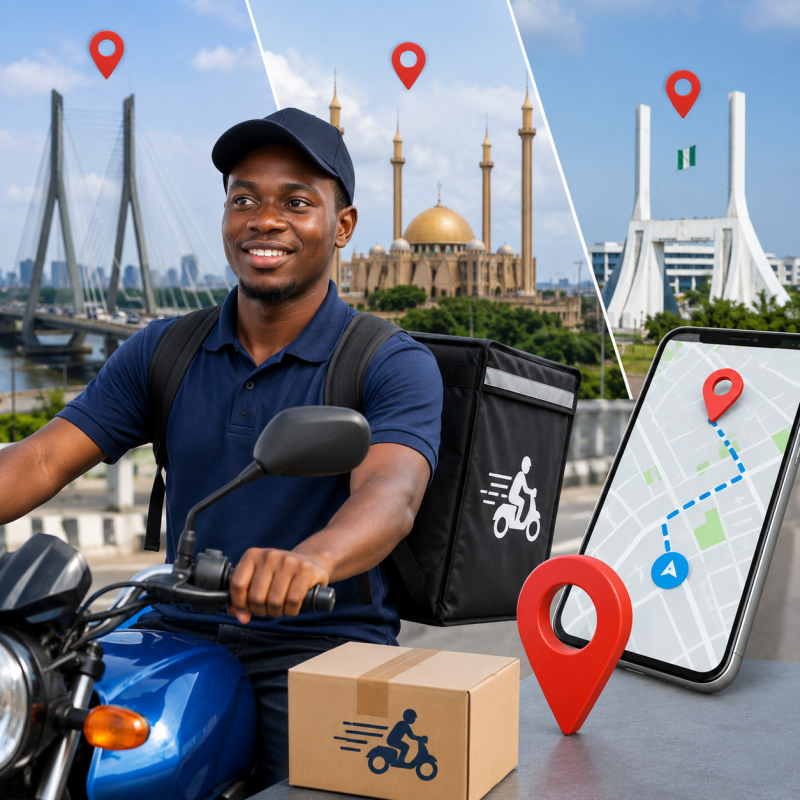
Part-Time Delivery Driver Jobs in Lagos, Abuja & Port Harcourt
The gig economy in Nigeria is growing faster than ever before, and let’s be honest, we all need an extra source of income. With inflation and the cost of living skyrocketing everyday, many Nigerians are looking for extra ways to make ends meet. One of the most popular and honestly, the easiest ways to earn this extra cash right now is through part-time delivery driver jobs. Wheather you are a university student, a standard 9-to-5 worker looking for a weekend hustle, or just someone who wants to be their own boss, the delivery and logistics sector is practically begging for more hands.
You see dispatch riders everywhere now. From the busy streets of Ikeja and Lekki, to the well paved roads of Wuse and Gwarimpa, down to the bustling areas of Ada George in PH. The demand for food, grocery, and package delivery has hit the roof. Startups like Chowdeck, Bolt Food, Glovo, and even traditional giants like GIG Logistics (GIGL) are constantly on the lookout for reliable part time drivers.
If you have been wondering how to tap into this booming sector, you have come to the right place. In this very comprehensive guide, we are going to break down everything you need to know about getting part-time delivery driver jobs in Lagos, Abuja, and Port Harcourt. We will look at the requirements, how much you can actually earn, the best platforms to join, and the realities of the job. Grab a cold drink because this is going to be a long, detailed ride.
Why Choose a Part-Time Delivery Job in Nigeria?
Before we start listing the companies and cities, we need to ask: why should you even consider being a delivery driver? Some people still look down on dispatch riders, but that is a huge mistake. The modern delivery driver is an independent contractor, an entrepreneur making cool money on their own terms.
1. Ultimate Flexibility: The biggest advantage is the freedom it gives you. Unlike a traditional office job where you must clock in by 8 AM and leave by 5 PM, part time delivery jobs allow you to choose your own hours. If you only want to work on Saturdays and Sundays, you can do that. If you want to work for just three hours every evening after your main job, the apps allow you to just go online and start recieving orders. You are literally your own boss.
2. Fast Weekly Payouts: Most delivery platforms in Nigeria pay their riders weekly. Sometimes you can even cash out your earnings daily depending on the platform. This is a life saver when sapa (being broke) hits in the middle of the month and you need urgent cash for data or fuel. Plus, you get to keep 100% of the tips that generous customers give you.
3. Low Barrier to Entry: You don’t need a university degree or five years of corporate experience to start. As long as you have a valid means of identification, a smartphone, a driver’s or rider’s license, and a clean driving record, you are good to go. Even if you don’t own a vehicle, some fleet management companies can rent one to you.
4. You Can Drive Different Vehicles: You don’t necessarilly need a car. Most food delivery platforms like Bolt Food and Chowdeck allow you to deliver using a motorcycle (bike) or even an electric scooter depending on the city. This means lower maintainance costs and less money spent on fuel.
City Breakdown: Lagos, Abuja & Port Harcourt
The experience of a delivery driver varies hugely depending on the city you are operating in. Let’s look at the big three cities where delivery jobs are booming.
Driving in Lagos: The Center of Hustle
Lagos is the commercial capital of Nigeria, and by far the biggest market for delivery jobs. With over 20 million people constantly ordering food from restaurants on the Island and Mainland, the demand for riders here is insane. But driving in Lagos is not for the faint-hearted.
The Opportunities: In Lagos, platforms like Glovo, Chowdeck, and Bolt Food are incredibly active. The order volume is massive, especially during lunch hours (12 PM to 2 PM) and dinner times on weekends. Areas like Lekki, Victoria Island, Ikoyi, Yaba, Surulere, and Ikeja are hot zones. If you position yourself in these areas, your phone will not stop ringing with order requests.
The Challenges: Lagos traffic (go-slow) is legendary. Delivering a package from Surulere to Lekki during rush hour can take hours if you are using a car, which is why motorcycles are the most preferred mode of delivery here. You also have to deal with aggressive driving from Danfo buses, and the constant fear of LASTMA officials or agberos (street urchins) trying to extort you. Knowing the inner routes and shortcuts in Lagos is a major survival skill for any delivery driver here.
Driving in Abuja: The Smooth Capital
Abuja offers a completely different vibe compared to Lagos. The roads are wider, the traffic is much less, and the city is generally more organized. For a delivery driver, this means less stress and less wear and tear on your vehicle.
The Opportunities: The food delivery culture in Abuja has exploded in recent years. Areas like Wuse 2, Maitama, Gwarimpa, and Asokoro have a high concentration of restaurants and wealthy residents who order in frequently. Platforms like Bolt Food and local dispatch companies are doing great numbers here. Because the roads are good, you can complete more trips in a shorter amount of time compared to Lagos.
The Challenges: While traffic isn’t a big deal, the distances between locations in Abuja can be quite long. Delivering from Gwarimpa to Central Business District means covering a lot of kilometers. Also, the VIO and Road Safety officials in Abuja are very strict. Your vehicle papers, rider’s permit, and license must be 100% complete and up to date, or you will pay heavy fines.
Driving in Port Harcourt: The Garden City
Port Harcourt (PH) is the hub of the South-South region. With a mix of oil company workers, business people, and students, the delivery market here is very lucrative and growing fast.
The Opportunities: Port Harcourt residents love good food, and apps are making it easier for them to get it. Key areas with high delivery requests include GRA Phases 1-3, Peter Odili Road, Ada George, and Choba (due to the university crowd). It’s a great city for part time drivers because the rush hours are quite predictable.
The Challenges: Some areas in PH can have bad road networks which can slow down deliveries and damage bikes. Also, security is something you have to be conscious about, especially when delivering late at night to unfamiliar or remote neighbourhoods. It’s always advised to stick to well-lit and secure zones if you are doing the night shift.
Top Delivery Platforms Hiring Right Now
If you are ready to start, here are the top platforms that are constantly recruiting part-time delivery drivers in Nigeria. Each platform has its own unique pay structure and requirements.
1. Bolt Food
Bolt Food is currently one of the largest food delivery networks in Nigeria, operating heavily in Lagos and Abuja. They offer great flexibility because you don’t have to commit to minimum hours or fixed shifts.
- Pay Structure: You see exactly what you will earn before you accept a delivery. Earnings include a guaranteed base pay, plus additions for distance, time, and peak-hour rewards. You also keep 100% of your tips.
- Requirements: Valid photo ID, a smartphone (Android 9.0+ or iOS 12+), a registered bike or car with valid insurance, and a bank account.
- Why choose them: Fast weekly payouts and a very stable app that rarely glitches.
2. Chowdeck
Chowdeck is a Y-Combinator backed startup that has taken the Nigerian food delivery space by storm. They are very popular for their fast delivery times and cool branding. They are actively hiring riders across Lagos, Abuja, and Port Harcourt.
- Pay Structure: They offer competitive base fares and frequent incentives for riders who hit specific weekly targets.
- Requirements: Valid rider’s card, a smartphone, and good customer service skills. They often provide the branded delivery box and gear.
- Why choose them: They have a very strong relationship with top restaurants, meaning order volume is always high.
3. Glovo
Glovo is a global app that delivers not just food, but groceries, pharmacy items, and essentially anything that can fit into their yellow bags. They operate in Lagos, Abuja, and several other Nigerian cities.
- Pay Structure: You are paid per delivery, taking into account the distance and waiting time at the pickup location.
- Requirements: Similar to others—smartphone, valid ID, and a registered motorcycle or car.
- Why choose them: Because they deliver groceries and other items, you can get orders even during non-meal hours, keeping you busy all day.
4. GIG Logistics (GIGL)
If food delivery is not your thing, GIGL is the biggest indigenous logistics company in Africa. They handle e-commerce deliveries, personal packages, and corporate dispatches.
- Pay Structure: GIGL often hires dispatch riders on a contract or full-time basis, but they also have models for independent partners using their app. They offer competitive salaries and health benefits for permanent staff.
- Requirements: Proven experience as a dispatch rider, deep knowledge of the city’s road network, and a valid rider’s license.
- Why choose them: They offer great corporate exposure, workplace wellness programs, and a very structured work environment.
5. Uber Delivery & Uber Eats
Uber is legendary. While mostly known for ride-hailing, Uber’s delivery arm is a massive opportunity. If you already drive for Uber, you can easily opt-in to do deliveries.
- Pay Structure: Fares are calculated based on pickup, drop-off, distance, and time. They also offer Eats Boost promotions during busy hours.
- Requirements: Meet the standard Uber driving requirements for Nigeria, pass a background check, and have a qualifying vehicle.
- Why choose them: The app seamlessly allows you to switch between picking up passengers and delivering packages, maximizing your earning potential.
6. HeyFood
HeyFood is expanding rapidly across Nigerian cities. They market themselves as offering riders the ability to be their own boss with no vehicle restrictions.
- Pay Structure: They automatically send you orders with full distance and guaranteed minimum pay shown upfront. They boast about depositing money into your bank account daily.
- Requirements: Must be 18 or older, have a smartphone, and a valid driver’s license.
- Why choose them: The daily payout option is a massive benefit for anyone who needs cash instantly.
What You Need to Get Started: The Requirements
You can’t just wake up and start delivering. There are legal and operational requirements you must meet to avoid trouble with law enforcement and to get approved by the apps.
1. A Valid Means of Identification: You will need a National ID card (NIN slip works), Voter’s Card, or International Passport to prove your identity.
2. Driver’s License or Rider’s Card: If you are using a car, you need a standard driver’s license. If you are using a motorcycle, you must obtain a Rider’s Card/Permit from the Vehicle Inspection Office (VIO). Driving without this is a direct ticket to having your bike impounded.
3. Vehicle Registration and Insurance: Your car or bike must be properly registered with the state government. You also need valid third-party insurance at the bare minimum. Some states also require a Local Government permit for commercial motorcycles.
4. A Good Smartphone: Your phone is your office. You need an Android or iOS device that is fast enough to run Google Maps and the delivery app simultaneously without freezing. A phone with a good battery life is crucial, though you should definitely invest in a strong power bank.
5. Internet Data: You will be online constantly. Make sure you use a network provider that has strong 4G coverage in your city. Dropping offline because of bad network means missing out on orders.
6. The Delivery Kit: Most apps will require you to use their branded thermal bags to keep food warm. Some give it to you for free after you complete registration, while others might deduct the cost from your first few earnings.
How Much Can You Actually Earn?
Let’s talk about the money, because that’s why we are here. Earnings vary wildly depending on how many hours you put in, the city you operate in, and the platform you use. But we can give a realistic estimate.
A part-time driver working about 4 to 5 hours an evening (say, 5 PM to 10 PM) and maybe 8 hours on Saturdays can complete around 10 to 15 deliveries a day.
On average, the base pay plus distance for a food delivery in Lagos or Abuja ranges between ₦800 to ₦1,500 per trip.
If you complete 12 trips a day at an average of ₦1,000 per trip, that is ₦12,000 daily.
If you work 5 days a week part-time, you are looking at ₦60,000 weekly, or about ₦240,000 a month.
This is just an estimate. During heavy rain, rush hour, or public holidays, platforms activate “surge pricing” or multipliers, meaning a trip that usually pays ₦1,000 can suddenly pay ₦2,000. Also, Nigerians are becoming more generous with tipping. It is very common for customers to tell you to “keep the change” or transfer an extra ₦500 or ₦1,000 to your account just for being polite and delivering fast.
However, you must remember to deduct your expenses. Fuel is currently expensive in Nigeria. You also have to buy engine oil, service the bike/car regularly, and buy data. Even with these expenses, a hardworking part-time driver can easily clear a net profit of over ₦150,000 monthly, which is more than the minimum wage and a very solid side hustle income.
Vehicle Options: Which is Best for Delivery?
The type of vehicle you choose will determine the kind of deliveries you can do and how much profit you make.
Motorcycles (Bikes): This is the undisputed king of delivery in Nigeria. Bikes can weave through the terrible Lagos traffic, they consume way less fuel than cars, and they are cheaper to maintain. To do food delivery, a standard 200cc engine bike (like the popular TVS or Bajaj models) is perfect. Just ensure it has a carrier attached to the back for the delivery box.
Cars: Using a car is safer and protects you from the harsh Nigerian sun and heavy rains. It also allows you to deliver larger items, like corporate packages or bulk grocery orders. However, cars burn a lot of petrol, and sitting in traffic will eat into your time and profits. Cars are better suited for Abuja roads or for platforms like Uber Delivery and GIGL.
Electric Bikes/Scooters: This is an emerging trend. Companies like Bams Mobility are now hiring riders to use electric bikes. The huge advantage here is that you spend absolutely zero naira on petrol. You just charge the battery and go. This maximizes your profit margin tremendously, though you have to be mindful of your battery range so you don’t get stranded.
Pro Tips to Maximize Your Earnings and Stay Safe
Starting out as a delivery driver can be stressful if you don’t know the tricks of the trade. Here are some pro tips from experienced riders to help you make the most money while staying safe.
- Chase the Surge: Pay attention to the app. Areas highlighted in red or orange mean there is high demand and not enough riders. Position yourself near busy restaurant hubs before lunch time (11:30 AM) and dinner time (6:00 PM).
- Customer Service is King: A simple “Good afternoon sir/ma, your order is outside” with a smile can earn you a ₦1,000 tip. Always be polite, even when the customer is cranky because they are hungry. Never argue with a customer; if there is an issue, let the app’s support team handle it.
- Invest in Good Gear: Buy a solid waterproof jacket and trousers. When it rains in Lagos or PH, many riders log off because they don’t want to get wet. If you have rain gear, you can stay online and enjoy massive surge prices and tips because customers are desperate.
- Know Your Routes: Don’t rely 100% on Google Maps. Sometimes Maps will direct you to a street with a locked gate, or a road that is completely flooded. Learn the inner streets and shortcuts in your city.
- Handle Food with Care: Nothing annoys a customer more than receiving a spilled drink or a crushed pizza. Secure the food properly in your thermal bag. Ride smoothly over potholes and speed bumps.
- Safety First: Always wear your helmet. It’s not just for the police; it’s to protect your brain. If an area looks very dark, lonely, or unsafe at night, call the customer to meet you at a safe junction. Your life is worth more than any delivery fee.
- Keep Your Papers Intact: LASTMA, VIO, and Police are always looking for a reason to stop dispatch riders. Keep your rider’s card, insurance, and road worthiness certificate wrapped in a waterproof nylon under your seat. Do not give them any excuse to delay you or collect bribes.
The Dark Side: Challenges You Will Face
I promised to make this a complete guide, which means telling you the honest truth. It is not always smooth sailing. Here are some realities you will face.
First is the physical toll. Riding a bike in the hot Nigerian sun for hours will drain your energy. You will face dust, exhaust fumes, and unpredictable weather. You must stay hydrated and take breaks to rest your back.
Secondly, you will encounter difficult customers. Some people will put the wrong address on the app, refuse to pick up their calls when you arrive, and then get angry that the food is cold. You need to develop a thick skin and a lot of patience.
Lastly, app glitches happen. Sometimes the app might crash in the middle of a delivery, or calculate the distance wrongly. While support teams usually resolve these, it can be very frustrating in the moment.
Conclusion: Is It Worth It?
Absolutely. If you have free time, a smartphone, and access to a vehicle, becoming a part-time delivery driver in Lagos, Abuja, or Port Harcourt is one of the most reliable ways to generate a second income stream in Nigeria today. The demand is not going anywhere; in fact, as more people get used to the convenience of ordering online, the logistics sector will only continue to expand.
You don’t have to quit your day job. You can just dedicate your weekends or evenings to hitting the road. As long as you are smart about your routes, maintain your vehicle properly, and treat customers with respect, you will definitely see the financial rewards.
How to Apply and Get Started Today
If you are ready to hit the road and start making your own money, the sign-up process for most of these platforms is entirely digital and very straightforward. You don’t even need to visit their offices to begin the process.
To sign up for Bolt Food, which is currently one of the best platforms for flexible part-time work, you just need to download their Courier app, upload your documents, and wait for verification.
Get started and register to deliver with Bolt Food using the official link here:
Become a Courier Partner – Deliver and Earn with Bolt Food
Alternatively, if you prefer to drive for Uber Delivery, you can check out their Nigerian driver portal to see the specific requirements for your city and sign up:
Sign up for Uber Delivery here:
Make Money Driving with Uber in Nigeria
Gather your documents, clean up your bike or car, download the app, and take control of your finances. The streets are waiting, and the money is there to be made. Goodluck out there!