

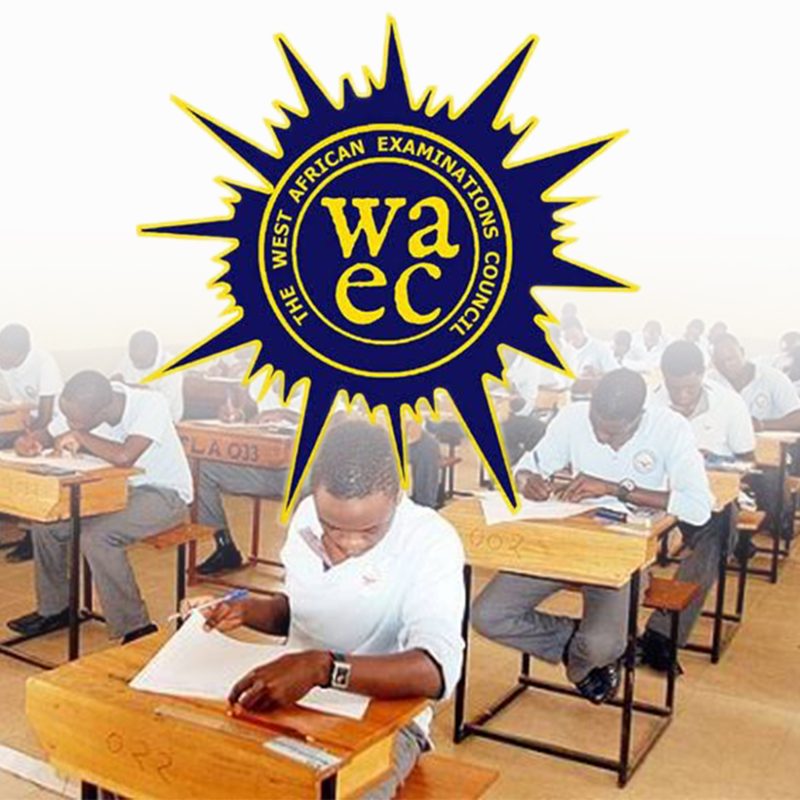
WAEC 2026 Mathematics OBJ & Essay Answers and Questions
The West African Senior School Certificate Examination (WASSCE) is a major milestone for secondary school students across West Africa. Among all the subjects offered, General Mathematics is undoubtedly one of the most critical. Because a credit pass in Mathematics is compulsory for university admission and career progression, millions of students search for WAEC 2026 Mathematics OBJ & Essay Answers and Questions to help them prepare adequately or verify their performance after sitting for the exam.
Navigating the complex nature of the West African Examinations Council (WAEC) math exam requires a strategic approach. This comprehensive guide provides deep insights into the structure of the examination, past trend analyses, expected topics, and the most reliable ways to access verified study materials. If you are a candidate aiming for an A1 or B2 in the upcoming paper, this breakdown will give you the competitive edge you need.
Understanding the Structure of WAEC 2026 General Mathematics Exam
To pass any examination, you must first master its layout. The WAEC General Mathematics paper is divided into two main sections: Paper 1 (Objective) and Paper 2 (Essay). Both papers are written on the same day, typically split into morning and afternoon sessions. Failing to manage your time between these two sections is one of the biggest reasons many students fall short of a distinction.

Paper 1: The Objective (OBJ) Section
The Objective paper consists of 50 multiple-choice questions that you must complete within 1 hour and 30 minutes. Each question carries equal weight. This section tests your speed, accuracy, and basic conceptual knowledge across the entire WAEC syllabus. Because the answers are shaded on an OMR sheet, there is no room for partial credit here—your answer is either entirely correct or entirely wrong.
Paper 2: The Essay (Theory) Section
The Essay paper is where you show your working out. It lasts for 2 hours and 30 minutes and is divided into two parts:
- Part I: Contains five compulsory, straightforward questions. These are designed to test foundational knowledge and carry lesser marks per question.
- Part II: Contains eight complex, situational, or multi-step questions. Candidates are required to choose and answer exactly five questions from this section. Each question carries heavier marks, and detailed step-by-step calculations are mandatory to secure full points.
Key Topics to Expect in WAEC 2026 Mathematics Questions
While the WAEC Mathematics syllabus is vast, analyzing historical trends reveals that certain topics appear year after year. Concentrating your study hours on these high-yield areas will drastically increase your chances of scoring high in both the OBJ and Essay sections.
1. Number and Numeration
This includes topics such as indices, logarithms, surds, sequences and series (Arithmetic Progression and Geometric Progression), sets, percentages, and financial mathematics (simple and compound interest, depreciation). You can expect at least 5 to 8 OBJ questions and at least one full Part II theory question from this area.
2. Algebraic Processes
Algebra forms the backbone of the WAEC math exam. Ensure you are highly proficient in solving linear and quadratic equations, simultaneous equations, word problems leading to equations, variations (direct, inverse, joint, and partial), and change of subject of a formula. Graphing quadratic and linear equations is also a staple in the essay section.
3. Geometry and Trigonometry
Many students struggle with geometry, but it is unavoidable in WAEC. Key areas include circle theorems (make sure you know your theorems and how to apply them), coordinate geometry, trigonometry (sine and cosine rules, angles of elevation and depression), and mensuration (surface areas and volumes of prisms, cylinders, cones, and spheres).
4. Statistics and Probability
You can almost guarantee that a major question in Paper 2 Part II will require you to draw a histogram, bar chart, or pie chart, or calculate measures of central tendency (mean, median, mode) from grouped data. Probability questions, including independent and mutually exclusive events, are also highly likely to feature prominently in both papers.
5. Vectors and Matrices
Basic operations on matrices, determinants, inverse of a 2×2 matrix, and addition or resolution of vectors are common, especially in Paper 1. Though simple, a single calculation mistake can completely ruin your final answer.
Sample WAEC Mathematics OBJ Questions & Practical Explanations
To help you understand how WAEC frames its multiple-choice questions, let’s look at a few practical examples with detailed walkthroughs. Notice how negligence in reading the question can lead to picking the wrong option.
Question 1: Solve for x in the equation: 3^{(2x – 1)} = 27.
To solve this indices problem, express both sides with the same base. We know that 27 = 3^3. Therefore, the equation becomes 3^{(2x – 1)} = 3^3. Since the bases are equal, we can equate the exponents: 2x – 1 = 3. Adding 1 to both sides gives 2x = 4. Dividing by 2, we get x = 2.
Question 2: Find the 15th term of the Arithmetic Progression (A.P.) given as 5, 9, 13, 17, …
The formula for the nth term of an A.P. is T_n = a + (n – 1)d. Here, the first term (a) is 5, the common difference (d) is 9 – 5 = 4, and n = 15. Substituting these values into the formula: T_{15} = 5 + (15 – 1)4 = 5 + (14 \times 4) = 5 + 56 = 61.
Question 3: A bag contains 4 red balls and 6 blue balls. If a ball is drawn at random, what is the probability that it is a red ball?
The total number of outcomes is the total number of balls, which is 4 + 6 = 10. The number of favorable outcomes is the number of red balls, which is 4. The probability is \frac{4}{10}, which simplifies to \frac{2}{5} or 0.4.
How to Approach the Essay (Theory) Section for Maximum Marks
In Paper 2, getting the final answer correct is only worth a fraction of the total marks. WAEC examiners utilize a strict marking scheme that awards points for Method (M), Accuracy (A), and Conceptual Understanding (C). Here is how you can optimize your presentation to claim every available mark:
- Show All Steps Clearly: Do not skip steps in your calculations. If you jump straight from a complex quadratic equation to the final values of x, you might lose up to 3 method marks, even if your answers are perfect.
- State Your Formulae: Before substituting numbers, write out the general formula you are using. If you accidentally make a subtraction mistake later on, stating the correct formula proves to the examiner that you understood the concept, saving you from a total zero.
- Include Units of Measurement: If a question asks for the volume of a cylinder, your final answer must explicitly state cm^3 or m^3. Omitting units is a classic act of negligence that costs students easy marks.
- Draw Clean Diagrams: For questions involving bearings, angles of elevation/depression, or circle geometry, always draw a clear, labeled diagram. It helps clarify your thoughts and earns you presentation points.
The Risk of Seeking “Runz” or Expo Answers Online
As the examination date approaches, the internet becomes flooded with websites, WhatsApp groups, and Telegram channels promising midnight delivery of “WAEC Mathematics expo” or direct answers. Relying on these sources is highly dangerous for several critical reasons:
First, WAEC has heavily stepped up its security measures, making use of advanced encryption and tracking mechanisms. Most answers circulated online hours before the exam are completely fake, recycled from previous years, or outright fabrications designed to steal money from desperate candidates. Walking into an exam hall relying on fake answers leads to immediate panic and failure.
Second, if WAEC detects identical, robotic answer scripts across a particular center due to mass cheating, the entire center’s results can be withheld or cancelled completely. Instead of wasting time and money searching for shortcuts, investing that energy into solving past questions is a guaranteed path to a genuine, stress-free parallel pass.
Effective Study Strategies for WAEC 2026 Mathematics
Success in Mathematics is built on consistent practice rather than cramming. Because math requires logical application, memorizing answers the night before the exam will not work. Implement these practical study strategies to boost your confidence:
- Use the WAEC Syllabus: Avoid reading blindly. Check the official syllabus to see exactly what topics are covered and what depth of knowledge is required. Do not waste days studying university-level calculus when WAEC only expects basic algebraic processes.
- Practice with Past Questions: Get a past question booklet covering at least the last ten years. Solve the questions under strict exam conditions—set a timer for 1 hour and 30 minutes for Paper 1 and see how many you can finish accurately.
- Join Study Groups: Explaining a mathematical concept to a classmate is one of the best ways to solidify your own understanding. If you struggle with circle theorems, find a peer who excels at it and exchange knowledge.
- Master Your Calculator: Ensure you are using a WAEC-approved non-programmable scientific calculator. Learn how to efficiently use it for calculating trigonometric ratios, standard forms, and statistical data. Knowing your tool saves precious minutes during the exam.
Conclusion: Prepare Early and Excel
The WAEC 2026 Mathematics exam does not have to be an intimidating obstacle. By understanding the format of both the OBJ and Essay sections, prioritizing high-yield topics, and presenting your answers systematically, hitting a distinction is completely within your reach. Do not fall victim to internet scams promising leaked question papers. Real success comes from early preparation and relying on verified educational resources.
To stay ahead of updates, download approved syllables, access a vast archive of past papers, and explore interactive math tutorials designed for West African students, get started with your preparation today.
To access verified preparatory materials, mock examinations, and official syllabus guidelines, click here to Get Started with Official WAEC Resources.