
Healthcare Jobs in Nigeria 2026: Doctors, Nurses, Pharmacists & Salary Structure
The healthcare sector in Nigeria has been going through a massive transformation over the last few years. As we navigate through 2026, the demand for medical proffesionals has never been higher. Between the rising population, the expansion of private health insurance, and the lingering effects of the “Japa” wave (brain drain), hospitals and health tech startups are aggressively looking for qualified hands. If you are a doctor, nurse, or pharmacist wondering about the current state of healthcare jobs in Nigeria, you are in the right place.
In this comprehensive guide, we will break down the available opportunites, what it takes to secure these roles, and most importantly, the current salary structures for medical workers across the country. Let’s dive right in.
The Current State of Medical Careers in Nigeria (2026 Overview)
To be completely honest, working in the Nigerian healthcare system is both challenging and rewarding. The goverment has been trying to curb the mass exodus of health workers to countries like the UK, Canada, and Australia. Because of this, we have seen some improvements in welfare packages, particularly in federal institutions. Private hospitals, especially the top-tier ones in Lagos, Abuja, and Port Harcourt, have also stepped up their game to retain top talents.



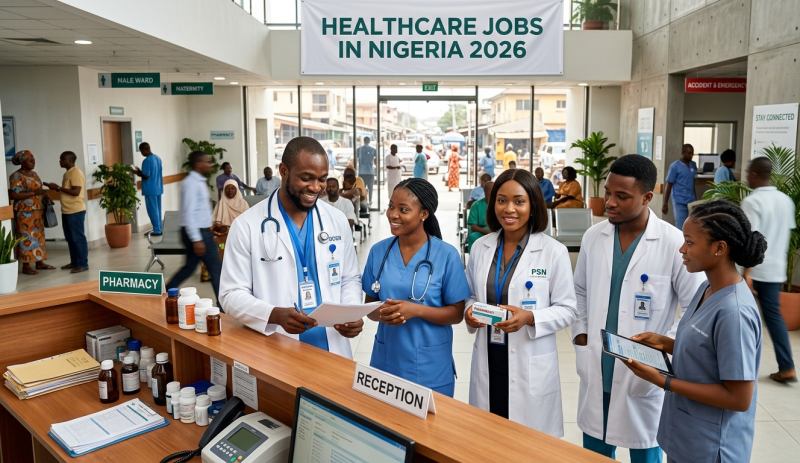
Whether you are looking at clinical practice, public health, or the booming health-tech sector, the healthcare jobs in Nigeria market is rich with possibilities. Employers are not just looking for certificates anymore; they want empathy, adaptability, and digital literacy.
Doctors in Nigeria: Opportunities and Salary Structure
Medical Doctors remain the most sought after professionals in the clinical space. From House Officers to Consultants, there are varous levels of entry depending on your experience. With the introduction of telemedicine and digital health platforms, doctors now have the option to consult online, providing a lucrative side income.
Where are the jobs?
- Federal and State Teaching Hospitals: These are still the biggest employers. They offer job security and the standard CONMESS salary scale.
- Private Hospitals and Clinics: Highly competitive but often offer better working conditions. Top private hospitals in Lagos can pay significantly higher than the public sector.
- NGOs and International Bodies: Organizations like WHO, UNICEF, and USAID are always hiring medical officers for public health interventions.
- Health Tech Startups: Many doctors are now pivoting into medical writing, product management, or telehealth consultation.
Medical Doctors Salary Structure (CONMESS)
The Consolidated Medical Salary Structure (CONMESS) is the official scale for doctors in federal and state hospitals. While exact figures can fluctuate due to economic adjustments and state-level variations, here is an estimate of what doctors earn in 2026:
- House Officers: Around ₦250,000 to ₦300,000 monthly.
- Medical Officers (MO): Depending on the level, MOs earn between ₦350,000 and ₦500,000 per month.
- Registrars/Senior Registrars: Ranging from ₦600,000 to ₦850,000 monthly.
- Consultants: Consultants earn anywhere from ₦1,000,000 to ₦1,500,000+ monthly, excluding private practice earnings which can double this amount.
Note: Private hospitals negotiate differently. Some might pay lower than CONMESS for junior doctors but offer performance bonuses and profit sharing for senior specialists.
Nursing Jobs in Nigeria: The Backbone of Healthcare
Nurses are quite litterally the backbone of the healthcare system. The demand for nurses has skyrocketed, not just locally but globally. This high global demand means Nigerian hospitals are constantly replacing staff, creating a continuous stream of vacancies for Registered Nurses (RN) and Registered Midwives (RM).
Career Paths for Nurses
Nurses today have moved beyond just ward duties. Specializations are where the big money and career growth lie. Some high-demand areas include:
- Intensive Care Unit (ICU) Nursing
- Pediatric Nursing
- Occupational Health Nursing (very popular in Oil and Gas and manufacturing sectors)
- Public Health Nursing
Nurses Salary Structure (CONHESS)
Public sector nurses are paid under the Consolidated Health Salary Structure (CONHESS). Here is a breakdown of the expected remuneration:
- Newly Qualified Nurses (RN/RM): Usually start around ₦150,000 to ₦200,000 monthly.
- Nursing Officers II & I: Earn between ₦220,000 and ₦350,000 monthly.
- Senior Nursing Officers / Matrons: Can earn from ₦400,000 to ₦700,000+ per month.
Just like with doctors, private hospitals vary wildly. A nurse in a high-end fertility clinic in Victoria Island will definetely earn more than a nurse in a small community clinic in a rural area. Offshore nurses in the oil and gas sector remain the highest earners, sometimes pulling in over ₦1,000,000 monthly.
Pharmacists: Roles, Demand, and Remuneration
The pharmaceutical industry in Nigeria is a multi-billion naira sector. Pharmacists are needed not just in hospitals to dispense drugs, but in manufacturing, quality control, regulatory affairs, and community pharmacy.
Job Opportunities for Pharmacists
If you have your B.Pharm or Pharm.D, here are the main sectors hiring:
- Community Pharmacies: Retail chains like Medplus, HealthPlus, and Alpha Pharmacy are constantly expanding and need superintendent pharmacists.
- Hospital Pharmacy: Managing inventory and clinical dispensing in public or private hospitals.
- Industrial Pharmacy: Working with local drug manufacturers like Emzor, Fidson, or multinational companies.
- Medical Sales Representatives: This is a very lucrative path. Reps get basic salaries plus huge commissions and official cars.
Pharmacist Salary Structure
In government hospitals, pharmacists are also on the CONHESS scale.
- Intern Pharmacists: Usually earn around ₦180,000 to ₦220,000 monthly.
- Pharmacist Grade II/I: Earn between ₦250,000 and ₦400,000.
- Principal/Director of Pharmacy: Can earn upwards of ₦600,000 to ₦900,000 monthly.
In community pharmacy, a superintendent pharmacist can negotiate a base salary of ₦250,000 – ₦400,000, plus accommodation and a percentage of the annual profit. Medical sales reps can earn base salaries of ₦300,000 but hit millions in quarterly bonuses if they meet their sales targets.
Other Emerging Healthcare Careers in 2026
The Nigerian medical field is not just about the big three (Doctors, Nurses, Pharmacists). Allied health proffesionals are gaining massive ground. Let us look at a few:
Medical Laboratory Scientists
With the rise of private diagnostic centers (like Me Cure and Afriglobal), Lab Scientists are in high demand. An entry-level scientist earns about ₦150,000 to ₦200,000, while senior lab managers can earn over ₦500,000 monthly.
Health Information Managers / Data Analysts
Data is the new oil, even in healthcare. Hospitals are moving to Electronic Medical Records (EMR). Professionals who can manage this data, ensure patient privacy, and analyze trends are highly sought after by health-tech companies. Salaries here often rival the tech industry, starting from ₦300,000 and scaling up rapidly.
Physiotherapists
Awareness around physical therapy and rehabilitation has grown. Sports clinics, orthopedic hospitals, and private fitness centers are employing physiotherapists. The pay is quite similar to the nursing scale in public service, but private home-care sessions can bring in substantial daily income.
How to Survive and Thrive in the Nigerian Healthcare Space
Working in this sector requires resilience. Here are a few tips to maximize your earning potential and career growth:
- Continuous Education: Do not just settle for your basic degree. Take professional courses. A doctor with an MBA or a nurse with an IT certification will always have the upper hand.
- Networking: Attend medical conferences, join professional bodies like NMA, PSN, or NANNM. Often times, the best paying jobs in private hospitals or NGOs are never advertised; they are filled through referrals.
- Consider Rural/Suburban Practice: Everyone wants to work in Lagos or Abuja, but some state governments offer massive rural allowances to attract doctors and nurses to less populated areas.
- Embrace Telemedicine: Sign up on apps like Helium Health, Tremendoc, or Reliance HMO. You can consult from your phone during your free time and earn extra cash.
Registration and Licensing
It is illegal to practice any healthcare profession in Nigeria without being fully registered with the appropriate regulatory body. Make sure your practicing license is up to date to avoid getting on the wrong side of the law.
For Medical Doctors and Dentists, all registrations, license renewals, and verification processes must be done through the Medical and Dental Council of Nigeria (MDCN). If you are a new graduate or a foreign trained doctor looking to practice in Nigeria, you need to visit their official portal to start your registration.
Get Started with your Medical Licensing: Visit the Official MDCN Portal Here
Final Thoughts
The landscape of healthcare jobs in Nigeria in 2026 is dynamic. Yes, there are systemic challenges, but there are also immense opportunities for those who are strategic about their careers. Whether you are aiming for the stability of a federal teaching hospital, the fast-paced environment of a private clinic, or the innovation of a health-tech startup, your skills are valid and needed.
Remember to always negotiate your worth, especially in the private sector, and keep upgrading your skills to stay relevant. The health sector is tough, but it remains one of the most noble and secure career paths you can choose.