
Artificial Intelligence Jobs, Ethics & Policy in Nigeria 2026
The year is 2026, and if you walk through the bustling streets of Ikeja Computer Village or the tech hubs of Yaba, the conversation has shifted. It is no longer just about “coding” or “web design.” The air is thick with talk of LLM fine-tuning, retrieval-augmented generation, and the latest directives from the National Information Technology Development Agency (NITDA). Artificial Intelligence (AI) is no longer a futuristic concept in Nigeria; it is the engine of our current economy.
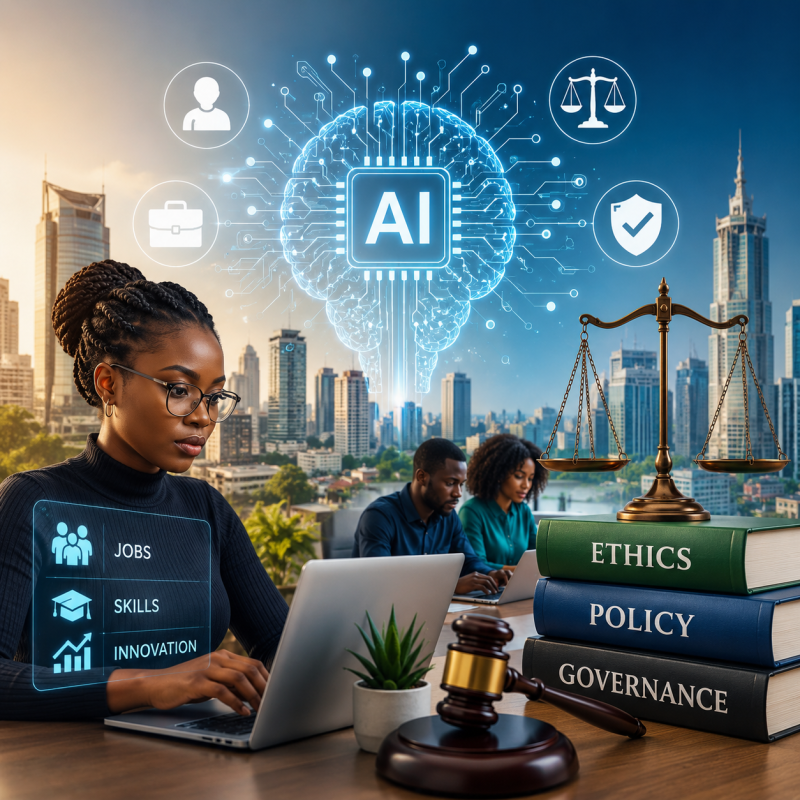
As we navigate this mid-decade reality, the intersection of AI jobs, ethics, and policy has become the most critical conversation for graduates, investors, and lawmakers alike. The “Japa” syndrome has met a new rival: the “Stay and Scale” movement, powered by remote AI roles and a burgeoning local ecosystem. But with great power comes great responsibility—and perhaps even greater confusion. In this article, we dive deep into the state of AI in Nigeria in 2026, exploring how we work, how we stay ethical, and how the law is trying to keep up.
The Shift in the Nigerian Job Market: Beyond the Hype
By 2026, the Nigerian job market has undergone a radical transformation. We’ve moved past the initial fear that “robots will take our jobs” and entered a phase of AI augmentation. In Nigeria, the impact is felt most in sectors like FinTech, Agriculture, and Creative Industries. While some traditional roles have faded, new ones have emerged that didn’t exist even three years ago.


1. High-Demand AI Roles in 2026
- AI Prompt Engineers and Context Designers: Businesses in Lagos and Abuja are hiring specialists who can communicate effectively with AI models to generate high-quality marketing copy, legal documents, and even software architecture.
- Data Annotators and Curators: With the push for “Localized AI,” there is a massive demand for Nigerians to label data in local languages like Yoruba, Hausa, Igbo, and Pidgin. This is essential for making AI understand the Nigerian context.
- AI Ethics Officers: Large corporations, especially in the banking sector, now employ ethics officers to ensure their credit-scoring algorithms aren’t biased against certain demographics.
- Machine Learning Operations (MLOps) Engineers: These are the professionals keeping the AI infrastructure running smoothly in our local data centers.
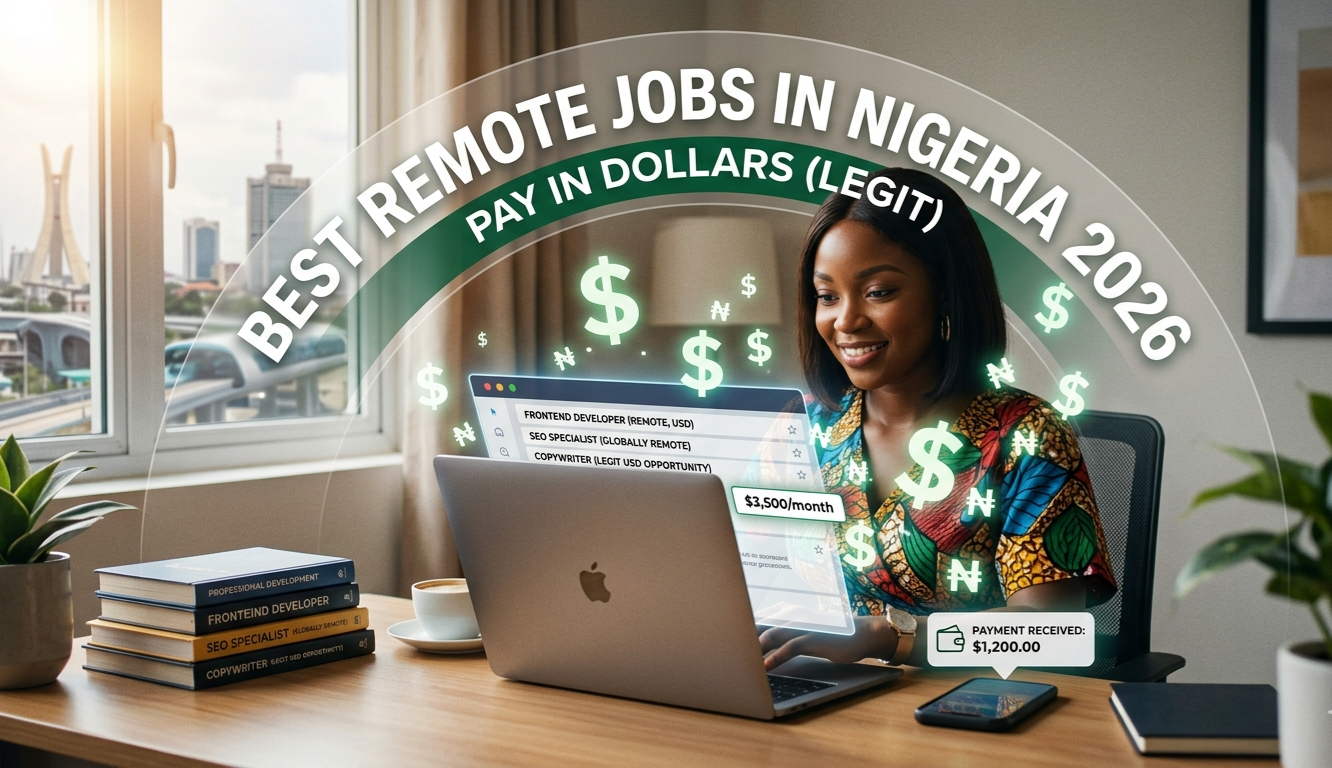
The hustle has evolved. It’s not just about having a degree anymore; it’s about having a portfolio that shows you can leverage AI tools to double or triple your productivity. We are seeing a lot of “AI-first” freelancers who are taking on international gigs from the comfort of their homes in Enugu or Port Harcourt, bringing much-needed foreign exchange into the country. It’s actually quite amazing to see how quickly our youth have adapted, despite the occasional power outages that still plague some areas—though even that is being managed by AI-optimized solar grids now.
Ethics in the Age of Algorithms: A Nigerian Perspective
Ethics in AI is often discussed in Western boardrooms, but in 2026, Nigeria has developed its own ethical framework. We realized early on that importing Western ethical standards wouldn’t solve our unique problems. For instance, an AI trained on American data might struggle to understand the nuances of the Nigerian “informal” economy.
The Challenge of Algorithmic Bias
One of the biggest ethical hurdles we face is bias. If a bank uses an AI to determine who gets a loan, and that AI was trained on historical data that favored wealthy individuals in certain postcodes, the AI will naturally discriminate against the hardworking entrepreneur in a low-income area. In 2026, Nigerian activists and techies are pushing for “Transparent AI.” We need to know why the computer said no.
Data Privacy and Sovereignty
With the Nigeria Data Protection Act fully matured by 2026, there is a tighter grip on how AI companies use our data. The question of “Who owns the data?” is central. Nigerians are becoming more aware that their digital footprints are valuable. There’s a growing movement to ensure that Nigerian data stays on Nigerian soil, processed by companies that understand our laws and cultural sensitivities. It’s a bit of a tug-of-war between innovation and privacy, and honestly, we don’t always get it right, but the effort is there.
The Policy Landscape: NITDA and the National AI Strategy
Government policy has often been accused of being behind the curve, but the National Artificial Intelligence Strategy (NAIS), launched a couple of years back, has provided a surprisingly solid roadmap. By 2026, we are seeing the fruits of this policy through several key initiatives.
1. The Regulatory Sandbox
NITDA has established a “sandbox” where AI startups can test their products in a controlled environment without the fear of immediate heavy-handed regulation. This has allowed for innovations in AgriTech, where AI-driven drones are now being used to monitor crop health in the Middle Belt, helping farmers increase yields significantly.
2. AI Education in Schools
Policy isn’t just about laws; it’s about preparation. The government has integrated basic AI literacy into the secondary school curriculum. The goal isn’t to make everyone a programmer, but to ensure every Nigerian knows how to navigate a world where AI is ubiquitous. You see kids in public schools now playing with basic neural network models—it’s quite a sight to behold.
3. Intellectual Property (IP) and AI
A major policy debate in 2026 revolves around IP rights. If a Nigerian artist uses an AI to generate a hit Afrobeats song, who owns the copyright? The Nigerian Copyright Commission (NCC) has been busy drafting new guidelines to address “Co-creations” between humans and machines. It’s a messy area, and there’s a lot of negligence in how some of these laws are being applied currently, but at least the conversation is happening.
The Economic Impact: Why This Matters for Nigeria’s GDP
AI is not just a tech trend; it’s a macroeconomic necessity. By 2026, it is estimated that AI-related activities contribute to a significant chunk of Nigeria’s non-oil GDP. By automating routine tasks, Nigerian businesses are becoming more competitive on the global stage. Cost reduction is the name of the game. Small businesses that couldn’t afford a legal team or a marketing department are now using AI agents to handle these functions at a fraction of the cost.
However, we must be careful. There is a risk of a “Digital Divide” where those with access to high-speed internet and AI tools pull further away from those without. Policy must ensure that the “AI Dividend” is shared across the 36 states, not just concentrated in the Lagos-Abuja-Kano triangle. We’ve seen some negligence in rural infrastructure development, which needs to be addressed if we want AI to be a truly national success story.
How to Position Yourself in the 2026 AI Economy
If you are reading this and wondering how to stay relevant, the answer isn’t necessarily to go and learn Python (though that helps). The answer is AI Fluency. You need to understand what these tools can and cannot do. Whether you are a lawyer, a doctor, or a fashion designer, there is an AI tool that can make you better at your job.
- Embrace Continuous Learning: The AI field moves so fast that what you learned six months ago might be obsolete today.
- Focus on Soft Skills: AI struggles with empathy, complex negotiation, and deep cultural context. These are the “human” skills that will be more valuable than ever.
- Networking: Join local tech communities. The best jobs in 2026 are still found through referrals and being active in the ecosystem.
The journey hasn’t been perfect. We’ve had our fair share of scandals—AI-generated deepfakes during elections, and some botched automated systems in the public sector. But that’s part of the growth process. We are learning by doing. Nigeria’s approach to AI is resilient, a bit chaotic, but ultimately full of that “can-do” spirit that defines us.
Conclusion: The Road Ahead
As we look toward the rest of 2026 and beyond, the message is clear: Artificial Intelligence is the new electricity. It will power our homes, our businesses, and our dreams. By focusing on Job Creation, Ethical Safeguards, and Proactive Policy, Nigeria is positioning itself as the AI hub of Africa. We aren’t just consumers of this technology; we are becoming creators, regulators, and ethicists in our own right.
The future isn’t something that happens to us; it’s something we build. And in Nigeria, we are building it with silicon, data, and a whole lot of heart. If you’re ready to be a part of this revolution, there’s no better time than now to get involved. The “New Nigeria” is digital, and it’s powered by AI.
To stay ahead of the curve and join the movement of Nigerians shaping the digital future, you can explore the latest initiatives and training programs provided by the government.
Get Started with National AI Initiatives
Note: As we continue to integrate these technologies, let’s remember that the goal of AI should always be to enhance the human experience, not replace it. Let’s keep the “Human” in the loop as we navigate this exciting 2026 landscape.